Commercial Moves in Ilford
If you are planning commercial moves in Ilford, you already know that business relocations are very different from a standard home move. Offices, shops, clinics, studios, workshops, and storage-based operations all come with their own timing pressures, equipment needs, access limitations, and packing requirements. A move that disrupts staff, customers, or day-to-day operations can quickly become costly, so the right approach matters from the very start.
Ilford is a busy and varied part of East London, with a mix of retail units, office spaces, shared work environments, industrial premises, and converted commercial properties. That variety means business removals here need planning, flexibility, and local knowledge. Whether you are moving within Ilford, relocating to a nearby area such as Redbridge, Barkingside, Seven Kings, Manor Park, or Stratford, or shifting between boroughs, a well-organised commercial relocation can help you stay on schedule and protect your assets.
Our service is designed for real local businesses that need a practical, efficient move with minimal disruption. From careful handling of furniture and IT equipment to after-hours scheduling and building access coordination, every step is planned to suit the way your business actually operates. If you need a team that understands business relocation in a busy urban area, contact us today to discuss your move and request a quote.
Commercial relocation support tailored to Ilford businesses

Every company move has different priorities. A small office in a shared building may need quiet, quick relocation outside working hours. A shop on a busy high street may need fast loading to reduce downtime and avoid disruption to neighbouring units. A medical practice, agency, or professional services office may need secure handling of files, sensitive equipment, and confidential materials. Commercial Moves in Ilford must therefore be built around the specific nature of the business, not a one-size-fits-all plan.
Local commercial customers often face the same challenges: limited parking, loading restrictions, narrow streets, lift access, stair-only buildings, and tight time slots for entry or exit. In parts of Ilford, especially around busy shopping streets and mixed-use developments, simply getting a vehicle close to the premises can take planning. That is where a local removals team becomes valuable. A crew familiar with the area can prepare for access issues, choose a sensible arrival time, and help make the move feel orderly rather than rushed.
We support businesses across a wide range of sectors, including offices, retail units, salons, clinics, studios, warehouses, and light industrial premises. Whether you are relocating a few desks or an entire working environment, the goal is the same: protect the equipment, move efficiently, and help your team get back to work as soon as possible.
What is included in a commercial move?

A commercial relocation should cover more than lifting and transport. A proper service usually begins with understanding what needs moving, where it is going, and what conditions apply at both buildings. That is especially important in Ilford, where commercial properties can range from older premises with awkward access to modern office blocks with controlled entry and time-specific loading bays.
Typical commercial moving support can include disassembly and reassembly of furniture, careful wrapping of desks and storage units, transport of filing systems, relocation of boxed inventory, and movement of office equipment such as printers, monitors, and networking hardware. If your business uses specialist items, that can often be discussed in advance so the move is organised around them. Good planning can also help reduce the risk of damage to flooring, walls, doors, and shared building areas.
For many businesses, the most useful part of the service is coordination. That might mean arranging the move over an evening, weekend, or quieter trading period; planning the route between old and new premises; and setting out the order in which rooms or departments should be moved. The aim is simple: a move that feels controlled, not chaotic.
Common items moved during business relocations
- Office desks, chairs, storage cabinets, and meeting tables
- Retail shelving, counters, display stands, and stock
- Clinic furniture, treatment room items, and waiting area furnishings
- IT equipment, monitors, peripherals, and telecom units
- Archive files, boxed documents, and confidential materials
- Light workshop tools, small machinery, and trade equipment
- Kitchenettes, staff-room contents, and break-area items
Why local knowledge matters for business removals in Ilford

Ilford’s road network, commercial density, and transport links make it a practical place to operate a business, but they can also make a move more complicated than it first appears. Busy routes, school traffic, high pedestrian flow, and restricted stopping areas all affect how a relocation should be planned. A local team that understands the area can adjust to those realities rather than discovering them on moving day.
Local experience also helps with timing. In commercial moving, the difference between a smooth day and a stressful one is often an hour or two. Arriving when roads are quieter, planning around tenant access windows, and knowing when building managers are likely to allow loading can save time and reduce disruption. If your premises are near Ilford town centre, the Exchange area, or a busier mixed-use street, those timing decisions become even more important.
Nearby areas such as Newbury Park, Gants Hill, Seven Kings, Goodmayes, Manor Park, Forest Gate, Romford, and Barkingside each come with their own access patterns and property styles. Some business customers are in converted houses used as offices, while others are in modern commercial blocks or parade units. Understanding that local mix helps create a move that fits the property, the street, and the workday.
Types of commercial moves we help with

Commercial Moves in Ilford can involve many different property types and business sectors. A reliable service should be adaptable enough to handle the size of the move, the type of items involved, and the pace you need. Some moves are planned months ahead as a full relocation, while others happen quickly because a lease ends, a fit-out changes, or a new workspace becomes available unexpectedly.
Common commercial relocation projects include:
- Office moves for small teams, growing companies, and multi-room workplaces
- Retail shop relocations including stock, tills, display fixtures, and backroom items
- Salon and clinic moves with treatment furniture and specialist equipment
- Studio and creative workspace moves for equipment, materials, and production items
- Warehouse and storage moves involving boxed stock, shelving, and logistics items
- Professional practice moves for businesses that need discretion and order
Whatever type of business you run, the move should support continuity. That may mean keeping parts of the office running during the relocation, moving departments in phases, or prioritising the items that are needed first at the new site. In many cases, the smartest move is the one that allows your team to keep serving customers with as little interruption as possible.
Helpful for small businesses and larger operations alike
Smaller firms often need a compact, efficient service with careful handling of furniture and equipment. Larger organisations may require a more detailed plan with multiple vehicles, staged loading, and clear instructions for different work zones. The right removals team should be able to adapt to both.
How a commercial move usually works
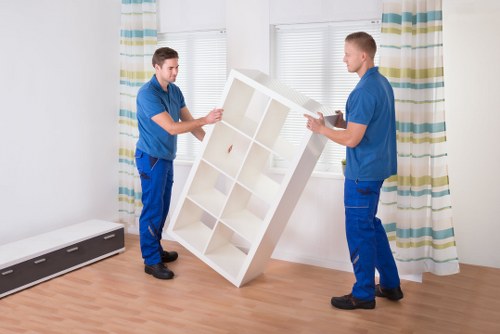
A well-run business move follows a clear process. The exact steps may vary depending on the type of premises, the distance travelled, and how much needs to be moved, but the overall structure is similar. The purpose of this process is to reduce disruption, keep items organised, and make sure your business can restart quickly at the new address.
Step 1: Initial discussion and planning — This is where you explain what you are moving, the site layout, any access concerns, and the timing you need. This is also the right moment to mention fragile items, restricted equipment, or items that require special care.
Step 2: Survey or move assessment — For larger commercial relocations, it can help to assess the property in advance. This makes it easier to plan vehicle access, packing materials, lifting requirements, and room-by-room sequencing. In Ilford, that can be especially useful if parking is tight or the building has limited loading space.
Planning a move around your business schedule
Step 3: Preparation and packing support — Depending on the service required, items may be packed, labelled, dismantled, or prepared for collection. Clear labels can make a big difference at the new site, especially if different departments or rooms need their items delivered in the correct order.
Step 4: Moving day execution — The team arrives at the agreed time, loads items carefully, protects the premises where needed, and transports everything to the new location. For businesses, speed matters, but so does organisation. The best outcomes come from both.
Step 5: Delivery, placement, and reassembly — Once at the destination, items can be placed in the correct areas, and furniture can be reassembled where included. This helps staff settle in more quickly and avoids unnecessary rearranging later.
For many companies, the ideal move is one that happens outside normal trading hours, over a weekend, or in a phased sequence. That is particularly useful for customer-facing businesses, where even a short closure can matter. If you are trying to protect revenue, minimise downtime, and keep your opening commitments on track, book your service now and plan ahead.
Good timing options for local businesses
- Evening moves after the working day ends
- Weekend relocations to reduce customer disruption
- Early starts for premises with limited loading access
- Phased moves for larger teams or multi-room offices
- Out-of-hours packing for businesses that must remain open
Preparation checklist for business customers
Preparation is one of the biggest factors in a smooth relocation. Even a highly organised removals team can only work well if the business is ready to hand over items in a sensible way. A checklist helps reduce confusion, prevents last-minute delays, and makes it easier to settle into the new premises.
Before moving day, consider the following:
- Confirm the move date, access times, and building rules at both addresses.
- Tell staff what they need to pack, label, or clear from desks and shared areas.
- Back up important data and arrange any IT shutdown or restart steps.
- Separate confidential files, sensitive equipment, and items that need special care.
- Label furniture, boxes, and departments clearly for easier placement later.
- Measure doorways, lifts, stair access, and loading points where possible.
- Remove items that are staying behind so they are not loaded by mistake.
It is also wise to plan the first day at the new location. Think about which desks, systems, and stock need to be available first so the business can function as quickly as possible. Good preparation reduces downtime, protects your assets, and makes the move feel far more manageable.
Pricing factors for commercial moves in Ilford
Customers often want to know what affects the cost of a business relocation. While exact prices depend on the details of the job, there are several common factors that usually influence the quote. Understanding these helps you compare options sensibly and plan your budget with fewer surprises.
Typical pricing factors may include:
- Volume and weight of items being moved
- Distance between the current and new premises
- Access conditions such as stairs, lifts, narrow entrances, or parking restrictions
- Need for packing, dismantling, or reassembly
- Fragile or specialist items that need extra care
- Timing, including out-of-hours or weekend work
- Number of staff and vehicles needed for the job
For Ilford businesses, access conditions can make a meaningful difference, especially in busy streets or multi-occupancy buildings. If the property is difficult to load from, or if the move needs to happen quickly because of limited access windows, this should be discussed early. A clear plan helps avoid wasted time and helps the quote match the real work involved.
Why transparent quoting matters
Business customers need clarity. A good quote should reflect the move requirements honestly, with no hidden assumptions about packing, labour, or access. That way, you can compare services properly and choose the option that best suits your operation.
Why choose a local commercial removals company?
Choosing a local team for commercial moves in Ilford offers practical advantages that can make a real difference on the day. Local crews are often better placed to understand parking patterns, route planning, and the pace of traffic in the area. They are also more likely to appreciate the mix of properties that make up the local business landscape, from retail parades to office suites and converted buildings.
There is also a customer-service benefit. When you are dealing with a move that affects your business operations, it helps to work with people who understand the urgency. A local company is usually easier to plan with, more responsive to changes, and better able to offer practical advice based on nearby conditions. If you are moving within Ilford or to a neighbouring district, that familiarity can save time and reduce friction.
Another advantage is flexibility. Sometimes commercial customers need a move to be broken into stages. Sometimes they need a fast turnaround after a lease ends. Sometimes they need extra care with shared entrances, limited lift access, or a building manager’s rules. A local service is often better equipped to adapt to those real-world needs.
Benefits often valued by business customers
- Better understanding of local streets and access limitations
- Quicker response for planning and scheduling
- Practical knowledge of commercial property types in the area
- Flexible solutions for phased or out-of-hours moves
- Less disruption for staff, customers, and neighbouring businesses
Areas covered around Ilford
Commercial relocation work often extends beyond the immediate town centre. Businesses move for growth, convenience, lease changes, or access to better facilities, so a local removals service should be ready to support nearby destinations too. The surrounding area includes a mix of office, retail, and industrial pockets, along with residential streets where smaller businesses operate from converted properties.
Areas commonly covered include:
- Ilford town centre
- Seven Kings
- Goodmayes
- Newbury Park
- Gants Hill
- Barkingside
- Manor Park
- Forest Gate
- Romford
- Redbridge and nearby East London locations
If your new premises are in a different part of East London or a neighbouring borough, the same planning approach still applies. Distances may be short, but the logistics can still be complex when equipment, access, and opening times all need to be managed carefully.
Practical issues to think about before the moving day
Commercial relocations work best when nothing important is left until the last minute. Even if the move itself is straightforward, small details can cause delays if they are not addressed early. This is especially true in business premises where different teams, departments, or customer areas may need to be moved in a certain sequence.
Think about matters such as:
- Where vehicles can safely stop or load
- Whether keys, fobs, or entry codes are needed
- Which furniture must be dismantled in advance
- How fragile stock or equipment should be protected
- Who will direct the move at each location
- What should be moved first so the business can resume
It can also help to notify building managers, landlords, or reception teams ahead of time. That way, lift booking, loading arrangements, and access approvals are already in place when the crew arrives. Planning these details early often saves the most time later.
FAQs about commercial moves in Ilford
Can you move a business outside normal working hours?
Yes, many commercial relocations are arranged for evenings, early mornings, or weekends to reduce disruption. This is often useful for customer-facing businesses or offices that need to stay operational for as long as possible.
Do office moves need packing help?
Not always, but packing support can make a large difference. If you have a lot of files, equipment, or furniture, professional packing or pre-labelling can help keep the move organised and reduce the chance of misplaced items.
What if my premises have limited parking or loading access?
That is common in parts of Ilford and nearby areas. A local team can factor in access restrictions, loading windows, and road conditions when planning the move so the job is carried out as efficiently as possible.
Can you move retail stock and fixtures as well as office furniture?
Yes. Many business relocations involve a mixture of stock, fixtures, shelving, counters, desks, and back-office items. The move should be planned around what needs to be transported and how it needs to be handled.
How far in advance should I arrange a commercial move?
As early as possible. Larger or more complex moves often need extra planning time, especially if access arrangements, packing, or phased relocation are involved. Early booking also gives you more flexibility with timing.
Is a survey useful before the move?
For bigger or more detailed relocations, yes. A survey or move assessment can help identify access issues, estimate the work involved, and ensure the move is planned properly from the beginning.
What should I do with confidential documents?
Confidential files should be packed and labelled carefully, and you may wish to keep them separate from general office contents. If your business handles sensitive paperwork, make sure those items are identified clearly before moving day.
What makes a smooth commercial move
A smooth relocation usually comes down to three things: planning, communication, and timing. The more clearly everyone understands what is moving, when it is happening, and where items should go at the new address, the easier the day becomes. That is true for small offices as well as larger business premises.
It also helps to have realistic expectations. Business moves almost always involve some disruption, but the right team can keep that disruption contained. With careful handling, sensible sequencing, and a good understanding of the local area, your move can be completed in a way that supports the continuity of your operations rather than interrupting them unnecessarily.
If you are preparing for commercial moves in Ilford, now is the right time to start planning. Whether you are relocating a retail unit, an office, or a mixed commercial space, a clear schedule and a practical removals team can make the difference between a stressful handover and a controlled transition. Request a free quote and get the process underway.
Ready to plan your move?
Discuss your dates, your premises, and the type of items involved so you can get a service tailored to your business. Contact us today to arrange your commercial relocation in Ilford and the surrounding areas.